Discover a practical approach to mesenchymal stem cell (MSC) and extracellular vesicle (EV) manufacturing that supports both process development and future commercial scale-up. This white paper explores how a xeno-free, GMP-grade culture medium can simplify manufacturing while maintaining product quality across 2D and 3D production platforms.
Key Takeaways
- Robust expansion of MSCs from bone marrow, adipose tissue, and umbilical cord sources
- A single xeno-free, GMP-grade medium supports both MSC and MSC-derived EV manufacturing
- Successful transition from 2D culture to scalable 3D manufacturing platforms
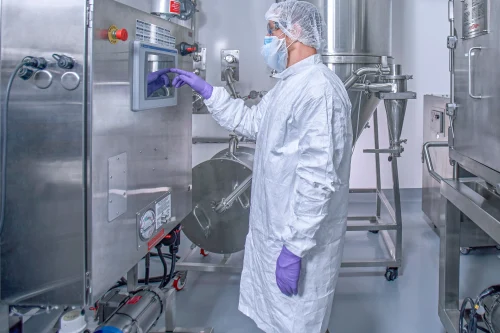
- Automated, closed, GMP-compliant workflows designed with scale-up in mind
- Maintenance of MSC phenotype, viability, and differentiation potential during expansion
- Production of high-quality EVs with strong integrity and exosome marker expression
- High cell and EV yields achieved at 1.4 L scale with a clear path to larger bioreactor production
- Demonstrated EV functionality in a wound-healing assay
Manufacturing remains one of the biggest barriers to bringing MSC and extracellular vesicle therapies from the lab into the clinic. Processes that work well at small scale often become difficult to reproduce when developers begin thinking about GMP manufacturing, automation, and commercial supply. This white paper examines a practical approach to overcoming those challenges through the use of a single culture medium that supports both cell and EV production across multiple manufacturing formats.
TheraPEAK® MSC-VIVO™ was evaluated using mesenchymal stem cells derived from bone marrow, adipose tissue, and umbilical cord tissue. Across all sources, the medium supported strong cell attachment and expansion while preserving the characteristics expected of high-quality MSCs. The study also showed that expanded cells maintained their ability to differentiate into multiple lineages, an important consideration for developers focused on therapeutic applications.
The white paper also addresses one of the fastest-growing areas in regenerative medicine: MSC-derived extracellular vesicles. As interest in cell-free therapies continues to grow, manufacturing teams face the challenge of producing EVs at meaningful scale without compromising quality. The data presented demonstrates the generation of EVs with expected size profiles, high particle yields, and strong expression of commonly used exosome markers.
From Research Scale to Automated Manufacturing
A major focus of the study is the move from conventional 2D culture into scalable 3D manufacturing. Initial work in spinner flasks demonstrated efficient cell growth and expansion while maintaining MSC quality attributes. These findings provided the foundation for further scale-up into automated bioreactor systems.
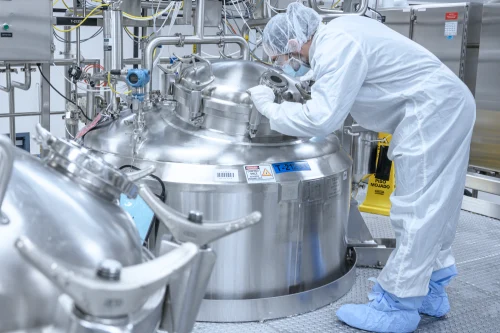
The paper explores manufacturing in both stirred-tank vessels and a 3D scalable automated bioreactor. Starting from relatively small culture volumes, the process was expanded to 1.4 liters while maintaining high viability and consistent performance. The results demonstrate how automated, closed manufacturing can support the production of clinically relevant quantities of MSCs while preserving quality throughout expansion.
Beyond cell production, the study evaluated EV manufacturing during bioreactor culture. EVs were collected and characterized throughout the process, with results showing consistently high particle counts, strong integrity, and robust marker expression. Importantly, quality was maintained even as cultures increased in scale.
The authors also investigated functional activity. In a wound-healing assay, EVs produced during the manufacturing process promoted endothelial cell migration and significantly improved wound closure compared with controls. These findings provide evidence that biological function can be preserved alongside scalable manufacturing.
This white paper is intended for process development scientists, CMC teams, manufacturing leaders, translational researchers, and organizations developing MSC or EV-based therapies. It will be particularly valuable for teams evaluating culture media, planning GMP manufacturing strategies, designing scale-up workflows, or looking to transition from research-scale production to clinical and commercial manufacturing.
Whether you are developing a cell therapy, advancing an extracellular vesicle program, or building a manufacturing platform capable of supporting future growth, the paper provides useful insight into how process scalability and product quality can be addressed together rather than as separate challenges.
Download the White Paper
Learn how a xeno-free, GMP-grade culture medium can support the manufacture of both MSCs and extracellular vesicles across development stages, from process optimization through clinically relevant scale-up.
Download the white paper to explore the data, manufacturing approach, scale-up strategy, and characterization results in detail.