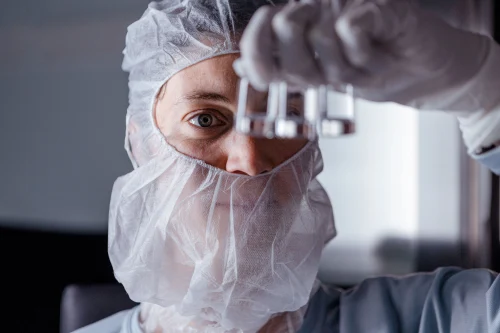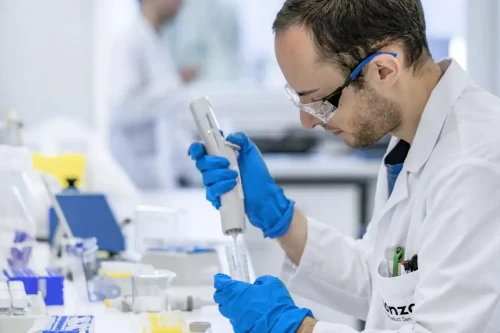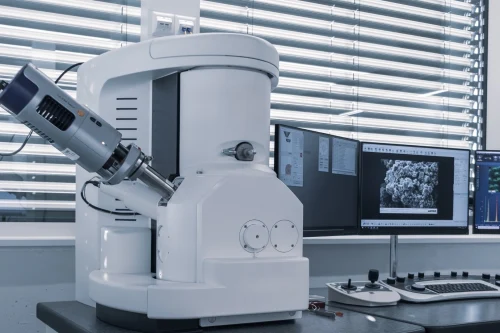
Early formulatability assessments use targeted stress conditions and advanced analytics to identify chemical and physical stability risks, such as aggregation, deamidation, oxidation, clipping, and loss of structural integrity, early in development.
Using a data‑driven platform, we rapidly identify more stable candidates with minimal material, enabling faster, lower‑risk molecule selection and informing biologics formulation strategy.

We tailor early biologics formulation development through tailored programs based on molecule complexity, using both platform and data-driven approaches.
Through a combination of Design of Experiment (DoE) high-throughput plate-based screenings and in-silico predictive tools, we efficiently evaluate formulation conditions. This integrated approach helps us identify the optimal pH, excipients, and surfactants needed to deliver a stable formulation aligned with the Target Product Profile (TPP) and intended packaging.
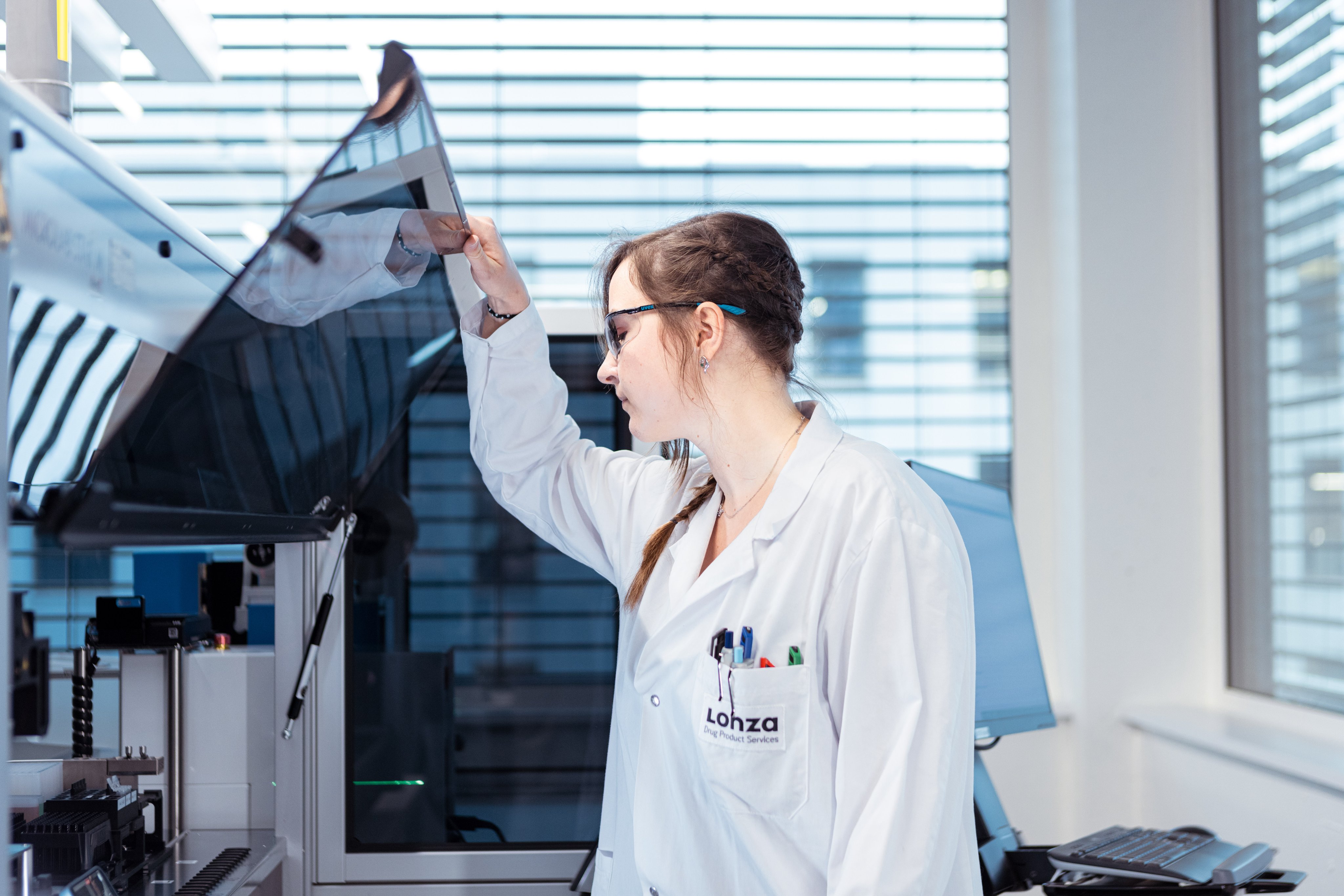
The success of any biologic depends on a strong late‑stage formulation strategy. Using our integrated approach and expertise, we develop stable, scalable formulations ready for commercial manufacturing and regulatory submission.
Typical late‑stage activities include:
- ICH-aligned stability
- Justification of target composition: optimizing pH/buffer, surfactants and excipients
- Formulation robustness: supporting manufacturability and specifications
- In‑use compatibility and stability assessments: achieving performance during preparation and administration
- Microbial challenge testing: confirming protection against contamination
Beyond launch, we support life cycle management through line extensions and presentation changes (e.g., vial-to-syringe transitions). These data form a strong foundation for CMC packages to support license applications.
Primary packaging development allows your drug product to remain stable, safe, and compatible across vials, prefilled syringes (PFS) and cartridges. Vials require control of stability, viscosity, and closure integrity. PFS introduce additional device-related considerations, such as injection forces, silicone oil, and needle design.
Due to this added complexity, PFS development requires earlier planning and close integration of formulation, packaging and device performance through the use of:
- Primary packaging compatibility
- Container closure development: identification of critical quality attributes ensuring container closure integrity for the components across presentations (combination of vials, stoppers, caps; barrel, plunger, needle for prefilled syringes and cartridges)
- Functionality/usability test including in‑use compatibility and stability, microbial challenge, injectability or rigid needle shield (RNS) testing
High‑concentration formulations (≥100 mg/mL) are increasingly common as self‑administration and patient‑friendly dosage forms become more widespread. However, these formulations introduce significant technical challenges, including elevated viscosity, higher aggregation risk or colloidal instability.
We address these challenges through a holistic approach that integrates formulation, process development, manufacturing, and analytics:
- In-silico modeling e.g., Gibbs-Donnan pH shifts, freeze-thaw and filling‑accuracy modeling
- Plate-based high-throughput screening for rapid viscosity, stability, and excipient assessment
- Design of Experiments (DoE) to efficiently identify optimal pH, ionic strength, excipients, and concentration-dependent behavior
- Early transition from vial to prefilled syringes (PFS)
- Process and manufacturing smart tools such as freeze-thaw and fill accuracy prediction
- Advanced analytics, including sub‑visible particle analysis or surfactant instability de-risking through host cell protein (HCPs) profiling by LC-MS and lipolytic activity characterization.
Our locations
Location where this service is provided
Basel, Stücki Technology Park, Switzerland
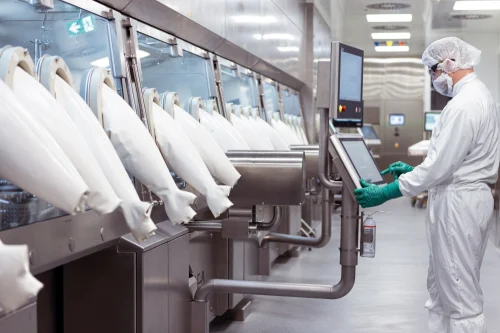
The Drug Product Services (DPS) group is located in Basel, Switzerland with state-of-the-art analytical, formulation and drug product processing equipment, and unparalleled expertise in parenteral drug product development, manufacturing and testing.
The DPS team is highly experienced in the development, manufacture and analysis of parenteral formulations and finished drug products for injection, infusion or implant of a variety of product types and molecules. The drug product analytical development and quality control group has industry-leading technical, scientific and regulatory expertise in method development, product characterization and testing of biopharmaceuticals and parenteral small molecule formulations.