Kofi Stevenson
Senior Upstream Manufacturing Supervisor
|
For customers, successful technology transfer is about more than moving a process into a new facility. It is about ensuring that process can be executed consistently at manufacturing scale. From the first cell thaw to harvest, manufacturing teams help identify risks, improve workflows and establish the operational readiness needed for successful large-scale production. “When we hear about tech transfers, we get really excited because it gives us a little bit of a sandbox to employ some of the optimization ideas that we might have had prior in previous years and apply them to a new process” Kofi Stevenson |
Turning process knowledge into manufacturing performance
Transferring a biologics manufacturing process into a 25,000-liter bioreactor environment requires more than process knowledge alone. At this scale, new layers of operational and technical complexity can often emerge. Equipment, automation, facility configuration, operational workflows and quality systems must all align under GMP conditions. Even small gaps that appear manageable on paper can become significant challenges once manufacturing begins. For customers, the critical question is not only whether their process can be transferred, but whether it can be executed reliably, repeatedly and compliantly at scale.
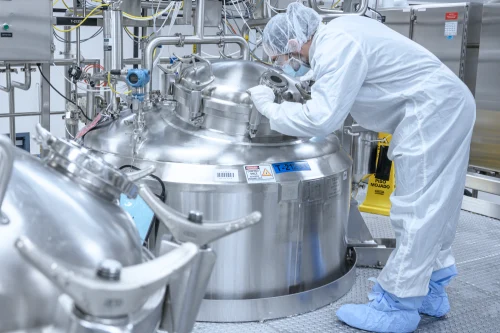
That is where upstream manufacturing teams can add practical value. At Lonza, my team supports the process from the first cell thaw, what is often called “Out of Freeze”, through harvest of our 25,000-liter bioreactors. During technology transfer, our role is to help translate a customer process into a robust manufacturing operation by identifying bottlenecks, incorporating operator insights and implementing reliable process performance on the manufacturing floor.
Building manufacturing readiness before the first inoculation
A technology transfer begins months before cells enter the first vessel. Teams assess facility fit, allocate equipment and plan any construction, mechanical or automation changes. Our manufacturing operators work alongside Manufacturing Science and Technology (MSAT), engineering, automation, maintenance, supply chain and quality experts to translate a customer process into our manufacturing environment.
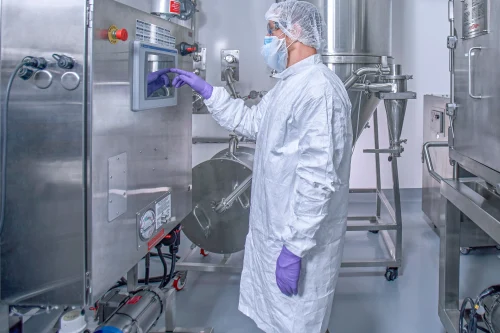
Depending on the process and molecule, the required changes can be substantial. Just as an anecdote, for one recent transfer, the site introduced new sparge lines (that deliver gas to support cell culture) on large-scale bioreactors, brought a hermetic centrifuge online for cGMP operations and updated automation recipes. Even when a change appears mostly mechanical, its successful use depends on procedures, controls, training and practical execution coming together.
Our manufacturing personnel contribute a floor-level perspective throughout this work. We review how prompts read, how steps sequence and how the proposed process interacts with day-to-day operations. This helps the wider team identify issues that may not be visible in a process map.
Engineering runs turn a theoretical process into plant reality
The engineering run is the point where tech transfer planning meets live execution. Its purpose is to take the process through the actual equipment and automation systems, expose pain points and correct them before qualification. The scale-up path is always product-specific. It can begin with a 250 mL spinner vessel, move through intermediate vessels and a 20- or 50-liter wave bioreactor, then progress into fixed bioreactors at 160 liters, 5,000 liters and 25,000 liters. At large scale, a culture may spend anywhere from 1 to 2 weeks in each equipment class, depending on the process and cell performance. The upstream engineering run progressed from thaw through the full seed train and into 25,000-liter production bioreactors in about two months.
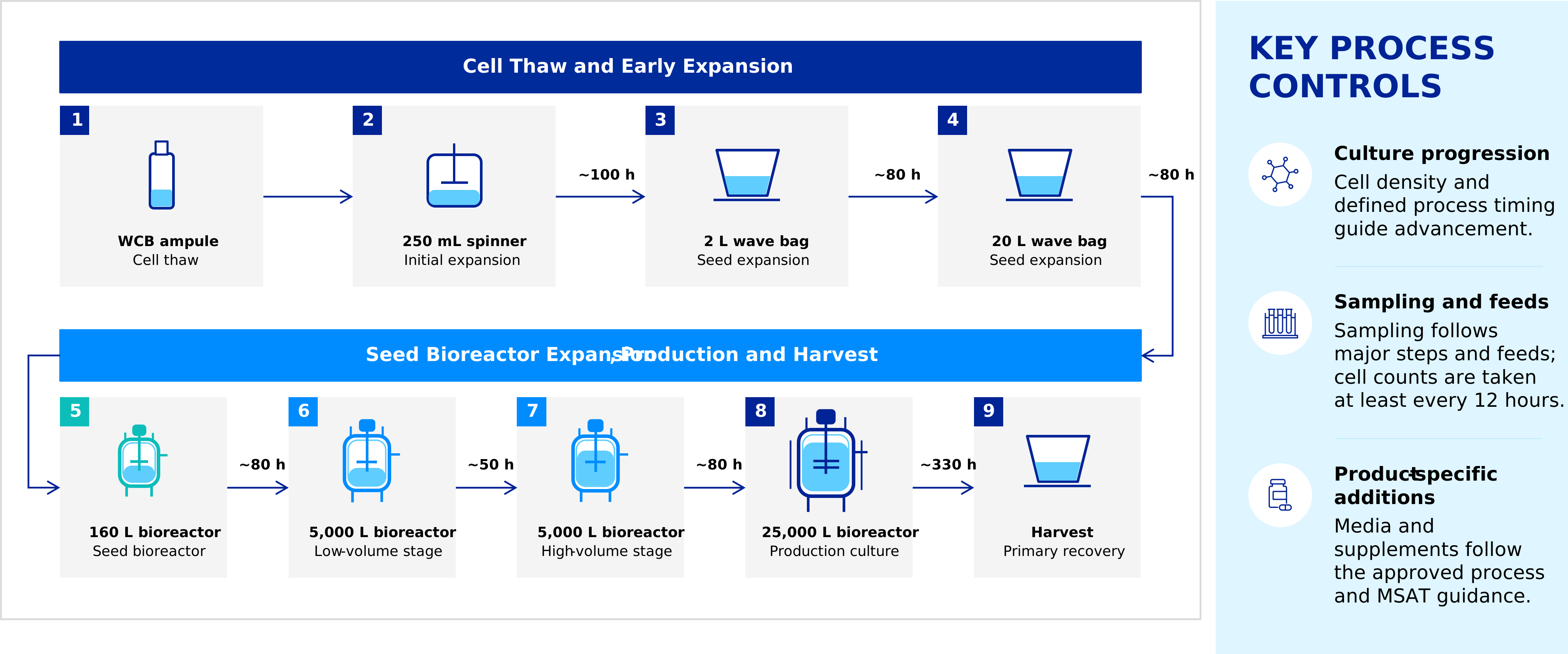
Figure 1: Illustrative upstream scale-up journey from cell thaw to 25,000-liter bioreactor and harvest.
At every stage, the team monitors whether the culture is ready to advance. Cell density is a central decision criterion, alongside defined process timing and MSAT guidance. Sampling is procedure-driven. In large-scale operations, samples are typically taken after major steps and feeds, with cell counts at least every 12 hours. This continuous stream of information supports timely decisions and a controlled scale-up. Ultimately, every improvement made during planning and engineering runs supports the same objective: increasing confidence in first-run success when the process reaches manufacturing scale.
Quality is built through training, trust and floor presence
Reliable manufacturing execution also requires the right quality culture. We begin building that culture before anyone enters the manufacturing area. Training explains not only what a procedure requires, but why documentation, escalation and adherence matter for customers and patients. Technicians are encouraged to participate in quality events and deviation work. If something falls outside expectations, it is recorded. If an activity does not proceed as planned, quality is involved. No one steps outside an approved procedure or recipe without the appropriate assessment and authorization.
As a supervisor, I believe strong floor presence is essential. That does not mean micromanaging every action. It means being accessible when a team member sees something unusual or needs help triaging an issue. People should feel trusted to execute their work and comfortable enough to raise concerns early. My background in quality also helps me support nuanced conversations and ensure events are documented clearly and compliantly. Strong floor presence also accelerates problem solving. When questions arise, experienced supervisors are immediately available to triage issues, support compliant decision-making and help teams return to execution without unnecessary delays.
Manufacturing floor expertise remains valuable long after batch completion
The manufacturing team's responsibility does not end at harvest. Digital batch records create a detailed execution history. During a transfer, temporary protocols may sometimes be used for specific activities, but these are quality-approved and controlled. Months after a batch, a customer may ask about a material consumption, a recorded result or an event in the batch report. Upstream personnel support those questions with firsthand process knowledge. The team also contributes to batch-record reviews, deviations, customer audits, regulatory inspections and health-authority inquiries. This continuity matters because the people who executed the process can explain how it operated in practice. Customers gain a partner that can support both manufacturing delivery and the evidence behind it.
Confidence at large scale comes from disciplined learning
A large-scale technology transfer is a coordinated learning process. Customers need confidence that their process will perform consistently in a new manufacturing environment. Engineering and MSAT establish the technical fit. Automation and maintenance prepare the systems. Supply chain ensures materials are available. Manufacturing then brings these elements together under real operating conditions, while the quality and regulatory teams validate and guard compliance.
My team's contribution is disciplined execution combined with practical judgment. We follow the approved process, monitor culture performance, identify bottlenecks, escalate anomalies and help improve the workflow before qualification. For customers, these observations are also very valuable because they convert execution experience into process optimization knowledge. Every bottleneck removed before qualification reduces operational risk and can help avoid delays later in the manufacturing lifecycle.
By combining engineering runs, operational expertise, quality-focused execution and continuous improvement, manufacturing teams help transform technology transfer from a complex process migration into a more predictable path to process validation, regulatory approval and long-term commercial manufacturing success.
About the author:
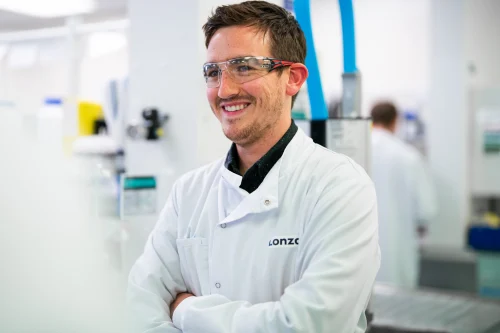
Kofi Stevenson is a Senior Upstream Manufacturing Supervisor with over 14 years of experience in large-scale biologics production at Lonza Vacaville. He began his career as a bioprocess technician and progressed through technical and quality roles, building deep expertise in cell culture operations, GMP manufacturing, and process troubleshooting. Today, he leads upstream teams responsible for executing complex manufacturing campaigns, supporting tech transfers, and ensuring reliable production at scale. With a background in biochemistry from UC Davis, Kofi brings a hands-on, solutions-driven mindset focused on resilience, continuous improvement, and delivering consistent outcomes for patients.
|
|
Are you looking for a commercial partner for mammalian manufacturing in the U.S.?Our teams combine large-scale capacity with proven execution to deliver reliable performance from tech transfer through commercial production. Contact us to explore your options. |

|
|