
Cell and gene therapy (CGT) continues to mature as a transformative treatment platform, advancing from early innovation to commercialization, as demonstrated by the growing number of FDA cell therapy initial approvals in recent years1. While FDA approvals slowed down in 2025, CGT remains one of the fastest-growing areas among biologics, with the global molecule pipeline expected to grow at a mid-to-high single-digit rate2 annually through to 2029. Large pharmaceutical companies continue to invest in CGT R&D and commercialization3, reflecting confidence in the field’s long-term potential. Venture financing has become more selective in 2025, focusing on proven, scalable programs with demonstrated commercial potential. In addition, investment in in vivo CAR-T and gene editing technologies, including CRISPR-based approaches, is increasing, driven by major pharma mergers and acquisitions. This trend supports the advancement of next-generation platforms and accelerates the transition from research to clinical application.
The cell and gene CDMO market is projected to grow at a mid to high single-digit rate annually 4 until 2029, driven by rising demand for specialized manufacturing and a robust late-stage pipeline. Reducing the cost of goods and improving process consistency remains essential for scalability and commercial success.
mRNA continues to advance beyond its pandemic-era foundations toward a broader therapeutic landscape, with cancer vaccines and mRNA-based therapeutics expected to drive strong growth. Emerging technologies such as in vivo gene editing and in vivo CAR-T therapies are attracting significant industry attention, supported by major pharmaceutical investments and acquisitions 5. These developments highlight the modality’s expanding potential across multiple therapeutic areas and reinforce mRNA’s role as a key enabler of next-generation biologics and precision medicine.
The microbial modality landscape encompasses a broad range of molecules from simple carbohydrates to complex, post-translationally modified biologics, reflecting its growing scientific and therapeutic diversity. The microbial CDMO market is projected to grow steadily by 4 to 6%6 between 2025 and 2029. Healthy demand for late phase microbial manufacturing is outstripping CDMO market capacity and customers look to experienced manufacturing partners that can design, build and manage plants as well as navigating the complexities of microbial tech transfer and scale-up.
Source: Citeline Analysis (2025).
Source: Lonza Internal Analysis (2025).
Source: ARM Resources; GlobalData.
Source: Lonza Internal Analysis (2025)
Source: Nasdaq; EndPoints News.
Source: Lonza Internal Analysis (2025).
Our value proposition is built on proven quality, extensive scientific expertise and consistent delivery in cell and gene therapy manufacturing. With more than two decades of experience, we have established a leading global position in contract development and manufacturing. We combine GMP excellence with regulatory insight to ensure reliable quality and smooth submissions for our partners.
Our capabilities span a broad range of modalities, including cell and gene therapy, exosome-based therapies, induced pluripotent stem cells (iPSCs), mesenchymal stem cells (MSCs), natural killer cells (NKs) and other allogeneic platforms. Furthermore, we offer autologous chimeric antigen receptor T-cell (CAR-T), tumor-infiltrating lymphocyte (TIL), hematopoietic stem cell (HSC), T-cell receptor (TCR), and regulatory T-cell (T-reg) gene therapies, alongside viral vectors such as adeno-associated viruses (AAVs) and lentiviral vectors (LVVs).
From early process development to commercial manufacturing, we provide a comprehensive and integrated service offering in a highly fragmented industry. We also continue to launch key offerings to support customer milestones, including Investigational New Drug (IND) submissions, technology transfers, and commercialization planning. These initiatives strengthen our position as a reliable partner across every stage of the process that brings advanced therapies to patients.
process development projects across all modalities
pre-licensing inspections (PLIs) passed
commercial batches delivered by our Cell & Gene CDMO network
active therapies supported by Bioscience 1
year of established experience in Cell & Gene, mRNA (>5 years), and Microbial (40 years)
Including third party therapies and Lonza manufactured drugs.
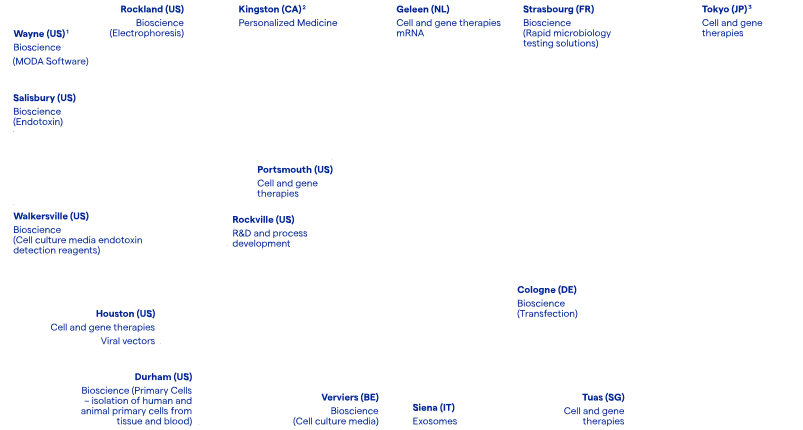
During the Covid-19 pandemic, we pioneered the large-scale commercial manufacture of mRNA medicines in record time, demonstrating our ability to adopt and manufacture new technologies at speed and scale. As mRNA expands across therapeutic areas, we continue to invest in early-stage innovation. Our mRNA and lipid nano-particle (LNP) manufacturing complex in Geleen (NL) supports IND-enabling, clinical, and small-scale commercial production. The facility includes process and analytical development, cGMP manufacturing, and quality control services for mRNA and LNP-based medicines. By combining scientific depth with integrated capabilities, we help customers advance confidently and efficiently towards the clinic.
With a track record of eight commercial licenses and expertise in large-scale complex protein and vaccine production, our Microbial Technology Platform is a trusted leader in late-phase and commercial supply for customers looking for quality and reliability. In 2025, we celebrated our 40th anniversary of working in the microbial space, building on a legacy of bioprocess innovation with more than 70 GMP technology transfers into Lonza. With our proprietary XS Technologies® expression system, state-of-the-art development labs, and GMP manufacturing scales spanning from 70L to 15,000L, our facility in Visp (CH) offers services that meet our customers’ needs across the entire product lifecycle.
In Bioscience, we have a strong portfolio of products and services that support the growth of the biologics, small molecule and cell and gene markets. Our customers value our improved reliability, reduced variability, ease of use, high performance and cost efficiency. Our expertise in primary human cell biology tools help enable customers to develop more predictive models and accelerate the path to IND. Our Bioscience products and services range from cell culture and discovery technologies for research to cell culture media, quality control tests, and biomanufacturing software solutions.
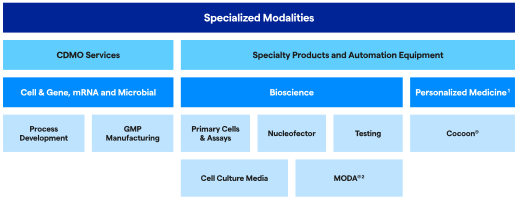
Lonza has signed an agreement to divest its Personalized Medicine business.
Lonza has signed an agreement to divest its MODA® business, with closing expected in Q2 2026.
The end-to-end process to produce a cell therapy can be long and involves complex supply chain logistics and manual manufacturing processes. Furthermore, most of the current manufacturing solutions are not sufficiently scalable to meet patient demand as cell therapies are approved for earlier lines of treatment or for more prevalent indications. Designed to address many of these challenges, our Cocoon® platform is a functionally closed, highly flexible and scalable autologous cell manufacturing solution. It enables decentralized manufacturing models that have the potential to reduce vein-to-vein times, deliver fresh cells, improve physician control, and enhance the patient experience. To date, we have worked with more than 30 customers and installed more than 150 Cocoon® instruments.
Lonza has signed an agreement to divest its Personalized Medicine business.


Lonza has signed an agreement to divest its MODA® business, with closing expected in Q2 2026.
Lonza has signed an agreement to divest its Personalized Medicine business.
Facility owned and operated by Nikon Cell innovation Co. Ltd. under Nikon-Lonza partnership.
In 2025, we worked closely with our partners to deepen existing relationships and onboard new customers across all development stages and modalities.
In our Cell & Gene Technology Platform, we welcomed six new customers across pre-clinical to late-phase cell therapy and viral vector programs. Additionally, we expanded seven customer programs, the majority of which are advancing late-stage clinical assets towards commercial readiness. This includes our amended agreement with Mesoblast, a key player in allogeneic cellular medicines for inflammatory diseases, to support the scale-up of commercial manufacturing for Ryoncil®, which became the first and only FDA-approved mesenchymal stromal cell (MSC) therapy in December 2024. Collectively, our balanced portfolio underscores the strength and versatility of our CDMO capabilities. Following successful pre-license and pre-approval inspections (PLI and PAI) at our sites, we added two new commercial manufacturing programs in cell and gene therapy. All Cell & Gene sites are now contracted to manufacture at least one approved commercial therapy.
Comparison vs. Prior Year
Sales (CHF)
CORE EBITDA (CHF)
CORE EBITDA Margin
Sales growth, expressed as a percentage (%), are at constant exchange rate (CER).
These milestones mark a significant step forward in scaling our commercial execution, strengthening our manufacturing network, and reinforcing our position as a trusted partner for the commercial supply of cell and gene therapies worldwide.
In 2025, our Geleen (NL) facility achieved GMP qualification for clinical mRNA manufacturing. This qualification followed extensive facility preparation, equipment qualification and cross-functional collaboration. At our site in Geleen, mRNA manufacturing capabilities are now fully integrated into our global network, enhancing flexibility, capacity, and supply resilience for our mRNA portfolio.
Our Microbial Technology Platform continued to build momentum in 2025 through strong customer retention and program expansions across all scales. We secured short- and long-term commercial contracts, including commitments at the 70L and 1,000L scales extending into 2027. To support this growth, we completed the upgrade and expansion of our mid-scale 4,000L facility in Visp (CH). We also successfully completed scale-up activities for four programs, including internal initiatives. These achievements reflect our continued focus on customer satisfaction, technical excellence, and commercial readiness to meet increasing customer demand in the microbial manufacturing space.

Head of Specialized Modalities
We entered new partnerships and expanded our capabilities across Specialized Modalities in 2025. We launched two new commercial programs, gained GMP qualification for mRNA manufacturing in Geleen, launched several innovative products and expanded our testing solutions portfolio with the acquisition of Redberry SAS. These achievements underline our commitment to execution excellence, scalability, and collaboration to support customers from early development through to commercial supply.

In 2025, our Bioscience business introduced several new products to expand and strengthen our portfolio. In July, we launched the 4D-Nucleofector® LV Unit PRO, a next-generation large-scale electroporation unit designed to deliver clinically relevant cargos into large volumes of T cells. Building on our non-viral large-scale transfection platform, the unit is optimized for CRISPR-based genome engineering and advanced cell therapy applications. A key innovation is the introduction of the Nucleocuvette® Cartridges PRO, enabling electroporation of complex cargos into up to one billion cells per run with improved usability, flexibility, and robustness. The upgraded system provides a scalable, reproducible platform supporting pre-clinical studies and process development, with seamless translation to GMP-compliant manufacturing for next-generation cell and gene therapies.
In October, we expanded our TheraPEAK® portfolio with AmpliCell® Cytokines and 293-GT® Medium to support cell and gene therapy development. The cytokines offer consistent immune cell expansion and are suitable for GMP manufacturing, while the medium enhances AAV production in HEK293 cells. Both products are scalable, regulatory-ready, and compatible with existing workflows – strengthening our offering by providing cell and gene therapy developers with reliable solutions.
Also in October, our Bioscience business announced the signing of an agreement to acquire Redberry SAS, a company specialized in rapid microbiology testing solutions using solid-phase cytometry (SPC) technology. The acquisition includes Redberry’s Red One™ platform, which enables faster sterility and bioburden testing, significantly reducing testing time from 14 days to just four. This agreement supports our commitment to providing scalable, automated QC solutions for biologics and cell and gene therapies.
CAR-T cells represent a powerful approach to treating cancer and autoimmune diseases by harnessing the body’s immune system. Traditionally, this reprogramming of immune cells is performed ex vivo, requiring complex manufacturing and conditioning regimens that limit accessibility and scalability. In vivo CAR-T therapy significantly expands the reach of this modality by enabling the reprogramming of immune cells directly within the patient’s body. This approach uses advanced delivery technologies to generate CAR-T cells in vivo, eliminating the need for costly and time-intensive ex vivo processes.
Discover More
